Waffles are more than just a breakfast item; they’re a versatile culinary canvas, transforming into sweet delights, savory meals, and even trendy street food. For any business looking to capitalize on the enduring popularity of this delightful dish, investing in a high-quality Commercial Waffle Maker isn’t just a choice—it’s a strategic move. Unlike their residential counterparts, commercial waffle makers are engineered for the relentless demands of a professional kitchen, promising consistent quality, robust durability, and the efficiency needed to keep up with peak demand. If you’ve ever wondered how your favorite café or dessert shop whips up those perfectly golden, consistently textured waffles, the secret lies in their industrial-grade equipment. These machines are the unsung heroes of many menus, offering a significant profit margin and endless opportunities for culinary creativity.
What Sets a Commercial Waffle Maker Apart?
At first glance, a commercial waffle maker might resemble a home appliance, but delve a little deeper, and the differences become abundantly clear. Built to withstand continuous, heavy-duty operation, these machines are designed for longevity and unwavering performance. They boast superior heating elements that recover quickly between batches, ensuring your waffles are always cooked to perfection, even during the busiest rushes. From their robust construction materials to their precise temperature controls, every aspect is optimized for high-volume environments. This translates to consistent waffle size and texture, even browning across every portion, and reliable operation that home units simply cannot match. Investing in a commercial model means investing in efficiency, customer satisfaction, and the long-term success of your waffle offerings.
Navigating the Diverse World of Commercial Waffle Makers
The world of commercial waffle makers is rich and varied, with each type designed to produce a specific style of waffle, catering to different menu concepts and customer preferences. Understanding these distinctions is key to selecting the perfect machine for your establishment.
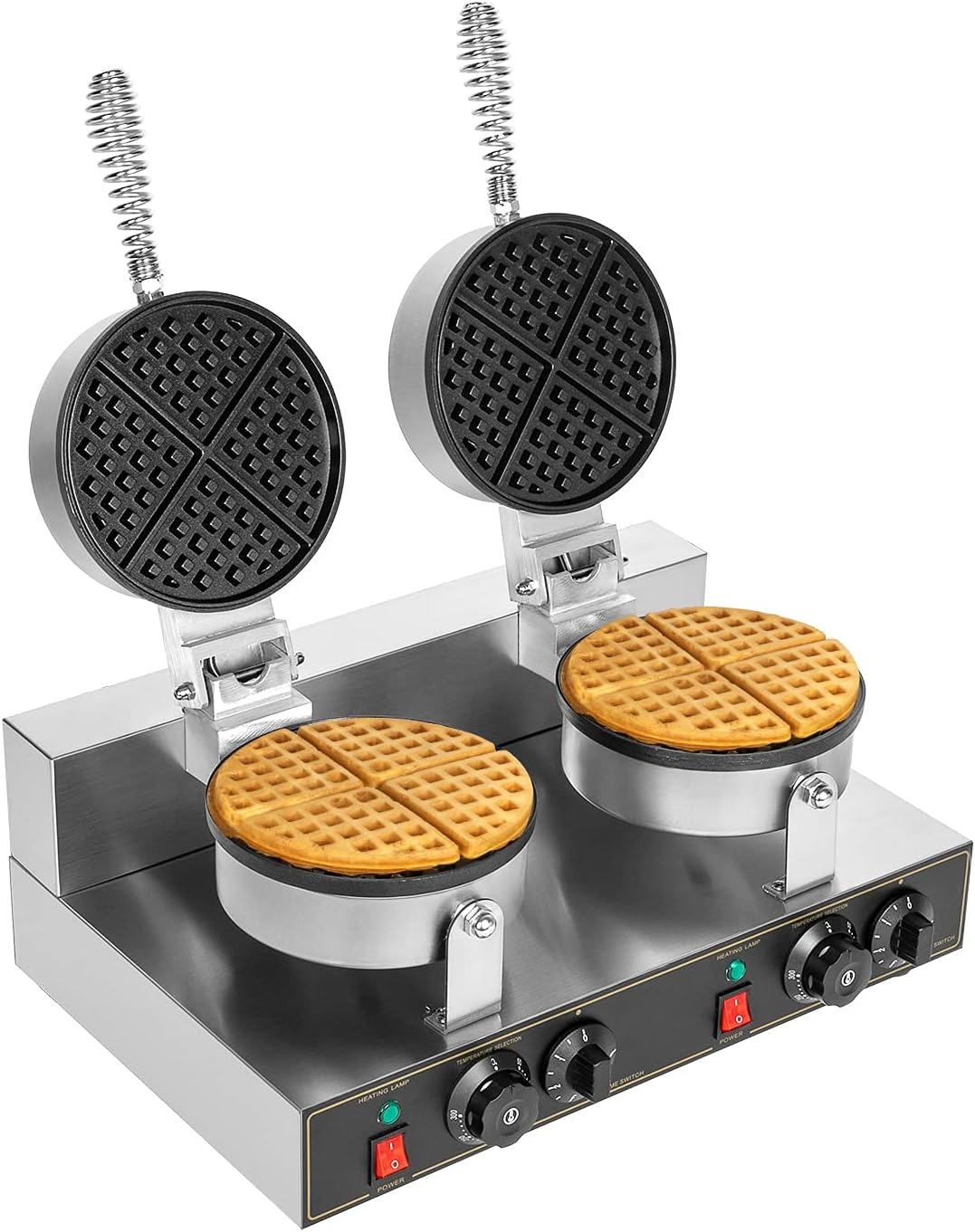
Classic and Belgian Waffle Makers
These are perhaps the most common types. Classic waffle makers, sometimes called North American style, create thinner waffles with shallower grids, ideal for crispy edges and a lighter texture. They are a staple for traditional breakfast fare.
Belgian waffle makers, on the other hand, are renowned for their deep, large grid patterns that yield thick, airy waffles with ample pockets perfect for holding syrups, fruits, and other toppings. You’ll find them in both round and square formats, with some models featuring a “double flip” design that allows for simultaneous cooking of multiple waffles and ensures even distribution of batter for consistent results.
Specialty Waffle Makers
Beyond the classics, a range of specialized machines caters to unique culinary trends:
- Bubble Waffle Makers: Also known as egg waffle or Hong Kong waffles, these machines create distinctive hexagonal patterns with large air pockets, resulting in a crispy exterior and a soft, almost cake-like interior. They’re perfect for rolling into cones and filling with ice cream or other sweet treats, making them a hit for dessert shops and street food vendors.
- Waffle Cone Makers: Essential for ice cream parlors, these machines produce thin, pliable waffles that can be quickly rolled into cones while still warm, offering a fresh, homemade alternative to pre-packaged options.
- Liege Waffle Makers: These specialized irons are designed for the denser, sweeter Liege waffles, which often contain pearl sugar that caramelizes on the surface, creating a delightful crunch.
- Brussels Waffle Makers: Producing light, rectangular waffles with crisp, defined edges, Brussels waffle makers are another European favorite, distinct from their Belgian counterparts in texture and shape.
Single, Double, and Rotating Models
Commercial waffle makers also vary in their capacity and design:
- Single Waffle Makers: Suitable for smaller operations or those with occasional waffle service.
- Double or Multi-Waffle Makers: Ideal for high-volume establishments, allowing you to produce two or more waffles simultaneously, significantly increasing output during peak hours.
- Rotating Waffle Irons: Many commercial models, especially Belgian ones, feature a rotating or “flip” mechanism. This design ensures that batter spreads evenly across both cooking plates, leading to uniformly cooked, perfectly golden-brown waffles every time.
Essential Features to Consider for Your Commercial Waffle Maker
Choosing the right commercial waffle maker involves a careful evaluation of several key features that directly impact performance, durability, and ease of use in a busy kitchen.
Construction and Durability: Built to Last
The materials and build quality of your waffle maker are paramount for longevity. Stainless steel is a preferred choice for its resistance to rust, corrosion, and the general wear and tear of a commercial environment. The cooking plates themselves are typically made from materials like cast iron, cast aluminum, or cast steel, each offering distinct advantages:
- Cast Iron: Highly durable with excellent heat retention, though it often requires seasoning to maintain its non-stick properties.
- Cast Aluminum: Known for even and efficient heat distribution, leading to faster preheating and baking times. It’s sturdy and long-lasting.
- Cast Steel: Offers superior durability and heat retention, with some plates being dishwasher-safe for easier cleaning, though they might take longer to preheat.
Many units also feature non-stick coatings, such as PTFE (Teflon) or ceramic, which are crucial for easy waffle release and hassle-free cleaning.
Cooking Capacity and Volume: Meeting Demand
Consider your expected waffle volume. Commercial waffle makers are rated by their hourly output, ranging from 18-30 waffles per hour for smaller models to 120-750 waffles per hour for high-capacity units. Single waffle makers suffice for modest needs, while double or multi-waffle makers are indispensable for busy diners, hotels, or catering services that need to serve many customers quickly.
Precision Temperature Control and Consistency
Achieving the perfect waffle consistently requires precise heat management. Look for machines with adjustable thermostats that allow you to fine-tune temperatures for different batter types and desired browning levels. Even heat distribution across the plates is critical to avoid unevenly cooked waffles.
Non-Stick Plates and Effortless Cleaning
Easy cleaning is a non-negotiable feature in any commercial kitchen. Non-stick cooking plates are vital for preventing batter from sticking, ensuring waffles release cleanly and intact. Many advanced models offer removable plates, which can be detached for thorough cleaning, and some even have drip trays and overflow channels to catch excess batter, keeping your workstation tidy.
Additional Features for Enhanced Operation
Modern commercial waffle makers often include features that further streamline the cooking process:
- Timers and Audible Alerts: These ensure consistent cooking times and free staff to attend to other tasks, signaling when waffles are ready.
- Ready Indicators: Lights that tell you when the machine is preheated and ready for batter, or when a waffle is finished.
- Digital Displays: Provide precise temperature readings and timer settings for greater control.
- Coated vs. Uncoated Grids: While coated grids offer easy non-stick properties and are common in self-serve buffets, uncoated grids can offer more versatility for gourmet waffles with inclusions like chocolate chips or fruit, though they require cooking spray.
- Electrical Configuration: Ensure the waffle maker’s voltage (e.g., 110V, 208V, 230V, 240V) is compatible with your kitchen’s electrical setup.
Mastering Your Commercial Waffle Maker: Usage and Maintenance
Getting the most out of your commercial waffle maker involves more than just plugging it in. Proper usage and diligent maintenance are key to consistent performance and extended lifespan.
First-Time Use and Initial Setup
Before its maiden voyage, always consult your machine’s manual. For cast iron plates, a proper seasoning process is often required to create a natural non-stick surface. Always preheat your waffle maker to the recommended temperature; this ensures the first batch, and every subsequent one, cooks evenly and browns beautifully.
Operational Tips for Perfect Waffles
- Portion Control: Use a ladle or measuring cup to pour the correct amount of batter. This prevents overflow and ensures a perfectly formed waffle every time.
- Timing is Everything: While many commercial units have built-in timers, slight adjustments might be needed based on your specific batter recipe and desired crispiness.
- Even Cooking: For models without a rotating feature, occasionally lifting the lid briefly can help release steam and promote even cooking, though this should be done sparingly to avoid heat loss.
Essential Cleaning and Care
“In the fast-paced world of commercial kitchens, efficient cleaning isn’t a luxury, it’s a necessity,” advises Chef Julian Thorne, a culinary equipment specialist at WaffleMasterPro. “Prioritize waffle makers with removable, non-stick plates and integrated drip trays. These features dramatically cut down on cleanup time, allowing your team to focus on serving delicious waffles, not scrubbing stubborn batter.”
- Always Unplug and Cool: Before cleaning, always unplug the unit and allow it to cool completely.
- Wipe Down Surfaces: Use a damp cloth to wipe down exterior surfaces. For stainless steel, a mild cleaner can maintain its shine.
- Clean Grids Carefully: For non-stick coated grids, use a soft brush or damp cloth to remove any cooked-on batter. Avoid abrasive cleaners or metal scouring pads, which can damage the coating. If your unit has removable plates, they can often be washed separately, sometimes even in a dishwasher (check your manual). For uncoated cast iron, clean with a stiff brush and water, then re-season if necessary.
- Drip Trays: Empty and clean drip trays regularly to prevent batter buildup and maintain hygiene.
Troubleshooting Common Waffle Woes
Even with the best commercial waffle maker, you might encounter minor issues.
- Waffles Sticking: Ensure grids are properly preheated. If using an uncoated iron, ensure it’s adequately seasoned or sprayed with cooking oil. If the non-stick coating is worn, it might be time for plate replacement or re-coating.
- Uneven Browning: Check that the waffle maker is fully preheated. Ensure the batter is evenly distributed (a rotating model can help).
- Soggy Waffles: This can be due to undercooking or too much moisture in the batter. Adjust cooking time or temperature, and check your recipe.
Choosing the Right Commercial Waffle Maker for Your Business
Making the final decision boils down to aligning the machine’s capabilities with your specific operational needs and budget.
- Assess Your Menu: What type of waffles do you want to serve? Belgian, bubble, classic, or a variety? This will dictate the style of waffle maker you need.
- Estimate Your Volume: How many waffles do you anticipate making per hour during peak times? This determines whether you need a single, double, or high-output multi-waffle maker.
- Consider Your Space: Commercial kitchens often have limited counter space. Factor in the footprint and any necessary clearance for flipping mechanisms.
- Evaluate Your Budget: Commercial waffle makers span a wide price range. While entry-level models are suitable for smaller operations, mid-range and high-end units offer enhanced features, durability, and higher performance for demanding environments. Balance the initial investment with the long-term benefits of efficiency and reliability.
- Prioritize Ease of Use and Cleaning: These factors directly impact staff efficiency and hygiene standards.
Frequently Asked Questions About Commercial Waffle Makers
Q1: What’s the main difference between a home and commercial waffle maker?
A1: Commercial waffle makers are built for continuous heavy use, offering superior durability, faster heat recovery, consistent results, and higher output capacity compared to home models, which are designed for occasional use.
Q2: What materials are best for commercial waffle maker plates?
A2: Cast iron, cast aluminum, and cast steel are common. Non-stick coatings like PTFE (Teflon) or ceramic are also popular for ease of release and cleaning. Stainless steel is often used for the exterior housing for durability.
Q3: How do I clean a commercial waffle maker?
A3: Always unplug and allow the unit to cool. Use a soft brush or damp cloth for non-stick plates; avoid abrasive cleaners. Removable plates simplify cleaning. Drip trays should be emptied and cleaned regularly.
Q4: Can I make different types of waffles with one commercial machine?
A4: Some commercial waffle makers come with interchangeable plates, allowing you to switch between different waffle styles (e.g., Belgian to classic). However, many are specialized for a particular type like bubble waffles.
Q5: How important is a rotating feature on a commercial waffle maker?
A5: A rotating or “flip” feature is highly beneficial as it ensures the batter spreads evenly and cooks uniformly on both sides, leading to perfectly golden and consistently textured waffles every time.
Q6: What should I look for in terms of electrical configuration?
A6: Ensure the waffle maker’s voltage (e.g., 110V, 208V, 230V, 240V) matches your kitchen’s power supply. Commercial units often require higher voltage for faster heating and more consistent performance.
Q7: How often should I season my cast iron commercial waffle maker?
A7: If your commercial waffle maker has cast iron plates, you should season them regularly, especially if waffles start to stick. The frequency depends on usage and cleaning methods; a well-maintained seasoning can last many uses.
Elevate Your Waffle Game with the Right Commercial Waffle Maker
Choosing a commercial waffle maker is an investment in your business’s culinary future. It’s about more than just cooking; it’s about crafting experiences, delighting customers, and optimizing your operations. By understanding the diverse types available, scrutinizing essential features, and committing to proper maintenance, you can select a machine that not only meets your current needs but also allows for growth and innovation. So, go ahead, explore the possibilities, and find the commercial waffle maker that will become the cornerstone of your sweet (or savory) success. The world of waffles awaits your golden touch!